
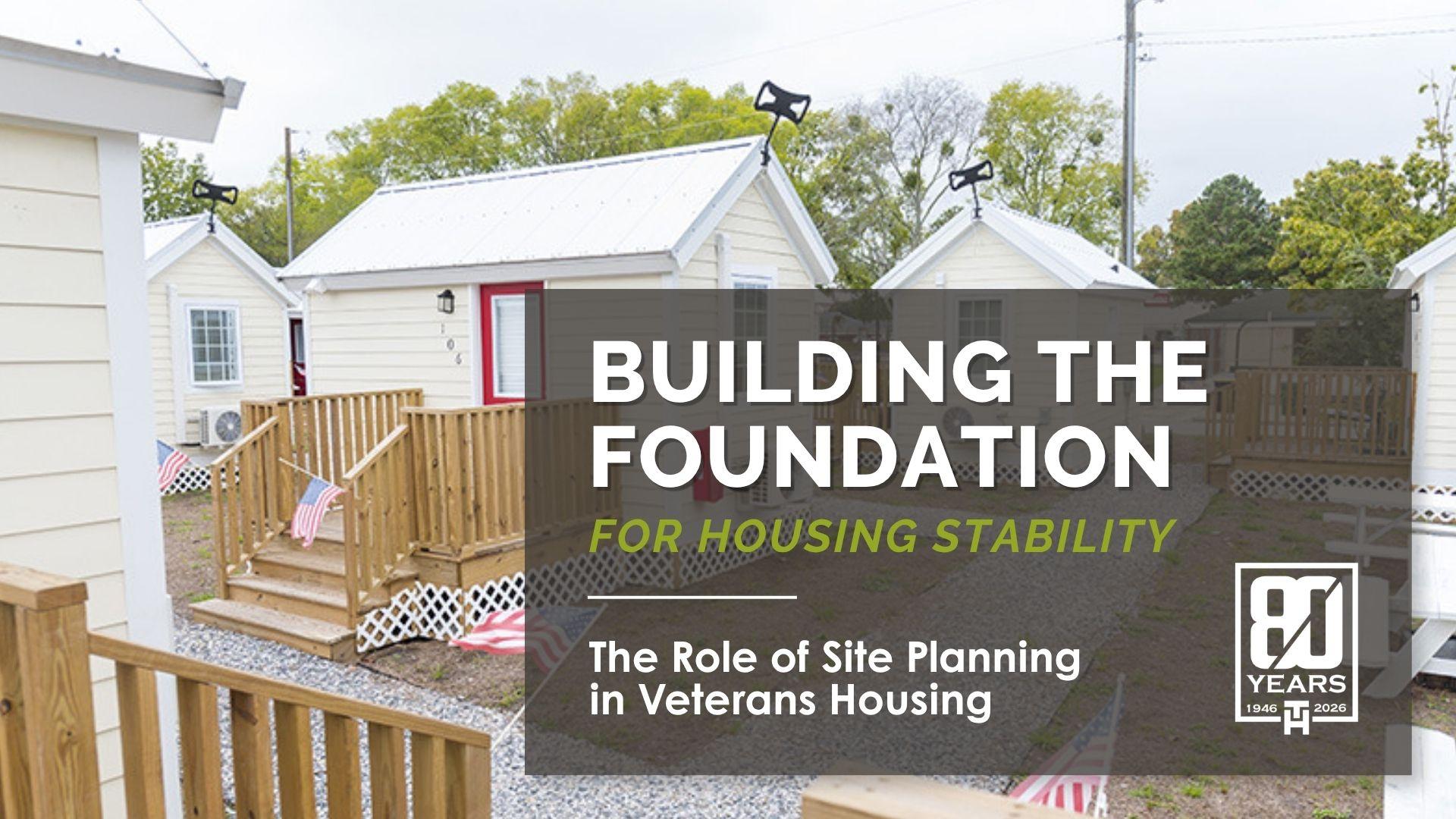
10 Sep Building the Foundation for Housing Stability
A site plan can’t solve homelessness. However, it can help create a physical setting where housing programs and support services can do their work.
Nationally, veteran homelessness has declined significantly over the past decade, demonstrating the progress that coordinated housing and service efforts can make. According to the U.S. Department of Housing and Urban Development’s 2025 Point-in-Time Count, 32,495 veterans experienced homelessness on a single night in January 2025, a 56.1 percent decrease since 2010. Of those veterans, 13,518 were experiencing unsheltered homelessness.
“Veterans put their lives on the line for us every day and then they come home and they don’t have the access that they should.” – Gavin Naples | Tunnels to Towers
The numbers show how much work remains. Housing can provide a foundation for stability, while thoughtful site planning can help residents connect with services, transportation, shared spaces, and the surrounding community.
A Mission Takes Shape
The Tunnel to Towers Foundation places veteran homelessness at the center of its Homeless Veteran Program. Through its Veterans Villages, the Foundation combines permanent housing with on-site services that support residents as they work toward greater stability and independence.
In July 2026, the Foundation opened its North Charleston Veterans Village. The project transformed a former hotel into 90 affordable housing units with a capacity for up to 98 veterans. Residents can access job training, employment assistance, benefits navigation, education assistance, financial counselling, legal advocacy, mental health and PTSD counselling, and addiction recovery services.
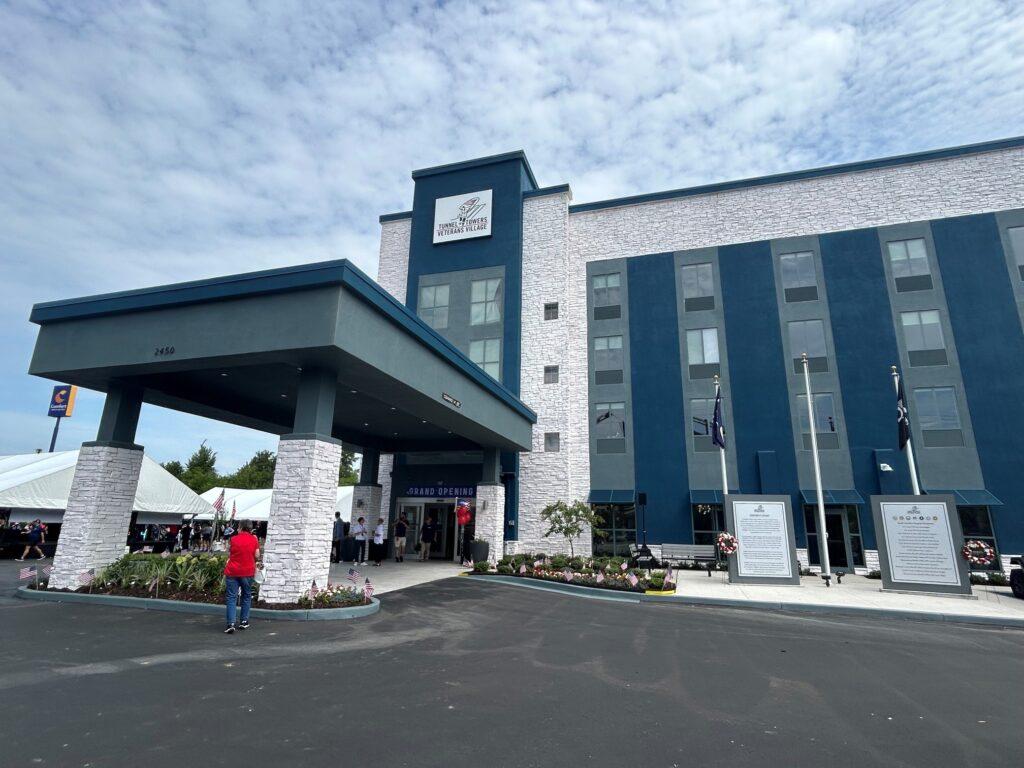
As part of the design team, Thomas & Hutton (T&H) provided civil engineering services for the redevelopment of the existing property.
T&H’s work with Tunnels to Towers extends beyond North Charleston, with the firm supporting developments in Atlanta, Memphis, and Jacksonville. While each community has the same mission, existing conditions, infrastructure, permitting requirements, and surrounding resources vary by location.
Designing Around the Mission
Finding a site is only the beginning in developing veteran housing. The property must also support the residents, programs, and daily operations that allow the community to function.
For hotel conversions such as the North Charleston Veterans village, the existing pavement, utilities, drainage systems, parking, and access become the starting point. The design team must evaluate how those elements align with the property’s new residential and service-oriented use.
Accessibility shapes that evaluation. Residents need clear routes between their homes, services, parking areas, and shared spaces. The property must also accommodate service providers, visitors, deliveries, and emergency responses.
Keeping the broader purpose visible helps the team evaluate how each site decision can support the people who will live and work there.
Six Questions to Ask When Evaluating a Site
-
Does the property provide appropriate access and circulation for residents, visitors, service providers, and emergency responders?
-
Are the available utilities adequate for the proposed use?
-
What stormwater, grading, or environmental conditions could affect development?
-
Can the site accommodate accessible routes between housing, parking, services, and shared spaces?
-
How easily can residents reach transportation, healthcare, employment resources, and other community services?
-
What permitting or jurisdictional requirements could affect the project’s cost or schedule?
Considering these questions early can help nonprofit organizations, developers, municipalities, and project partners identify constraints before they become larger obstacles.
Different Paths Toward Stability
Addressing homelessness takes more than one type of place. In Savannah, The Cove at Dundee and Union Mission’s Emmaus House Resource Center show how different spaces can support people at different points in that process.
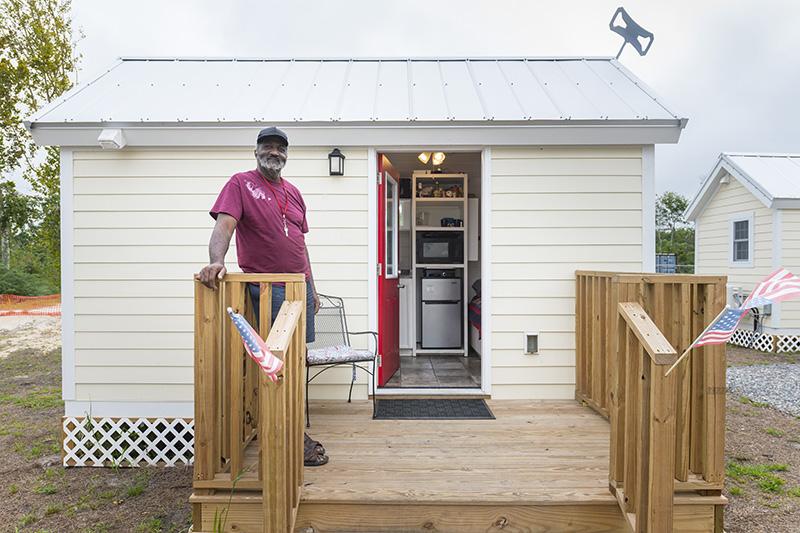
The Cove at Dundee provides permanent, affordable housing for veterans exiting homelessness. The community includes 46 tiny homes, each just over 125 square feet with a bed, full bathroom, and kitchenette, along with two clubhouses, a medical clinic, gardens, a walking path, and a pavilion. The cottages are arranged around shared green space, creating a small-footprint residential setting designed to support independence, connection, and long-term stability. T&H provided site planning, concept drawings, and City permitting services for the project. The final phase opened in August 2025 and included 12 homes dedicated specifically to veterans.
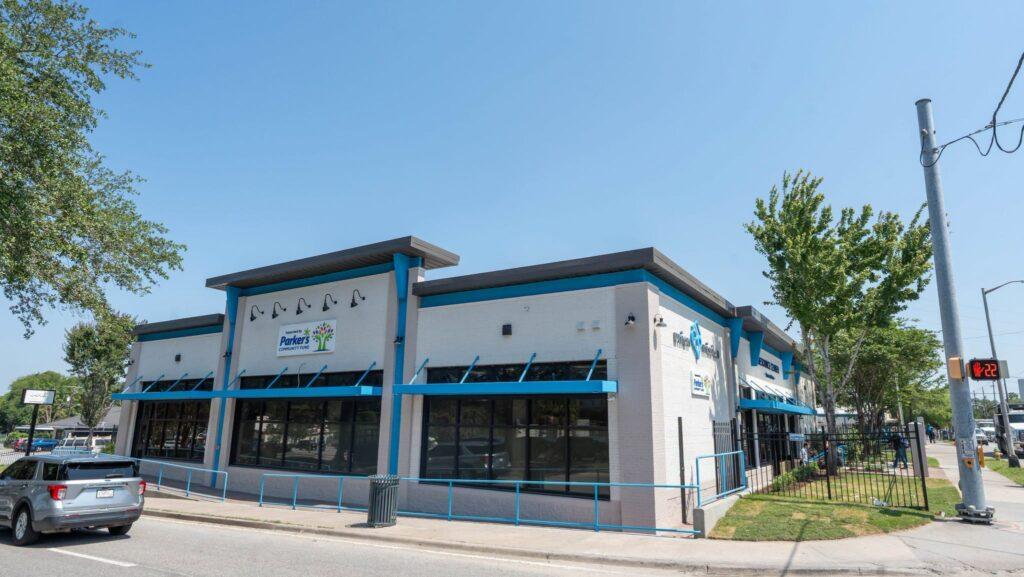
Nearby, Union Mission’s Emmaus House Resource Center brings meals, health services, housing navigation, and workforce resources together at one location. T&H’s services for the site include civil engineering and site development, including ADA-accessible infrastructure.
These communities fill different roles. Permanent supportive housing gives residents a place to rebuild stability. Resource centers help people meet immediate needs and connect with services that can move them toward housing.
Building for the Future
While veteran homelessness is declining, the 2025 count found that more than 32,000 veterans were still experiencing homelessness at a single point in time.
Continued progress depends on coordination among nonprofit organizations, municipalities, service providers, and the communities where these programs operate. T&H continues to support this larger effort by helping organizations address the site, infrastructure, accessibility, and permitting considerations involved in bringing housing and resource facilities into service.
