
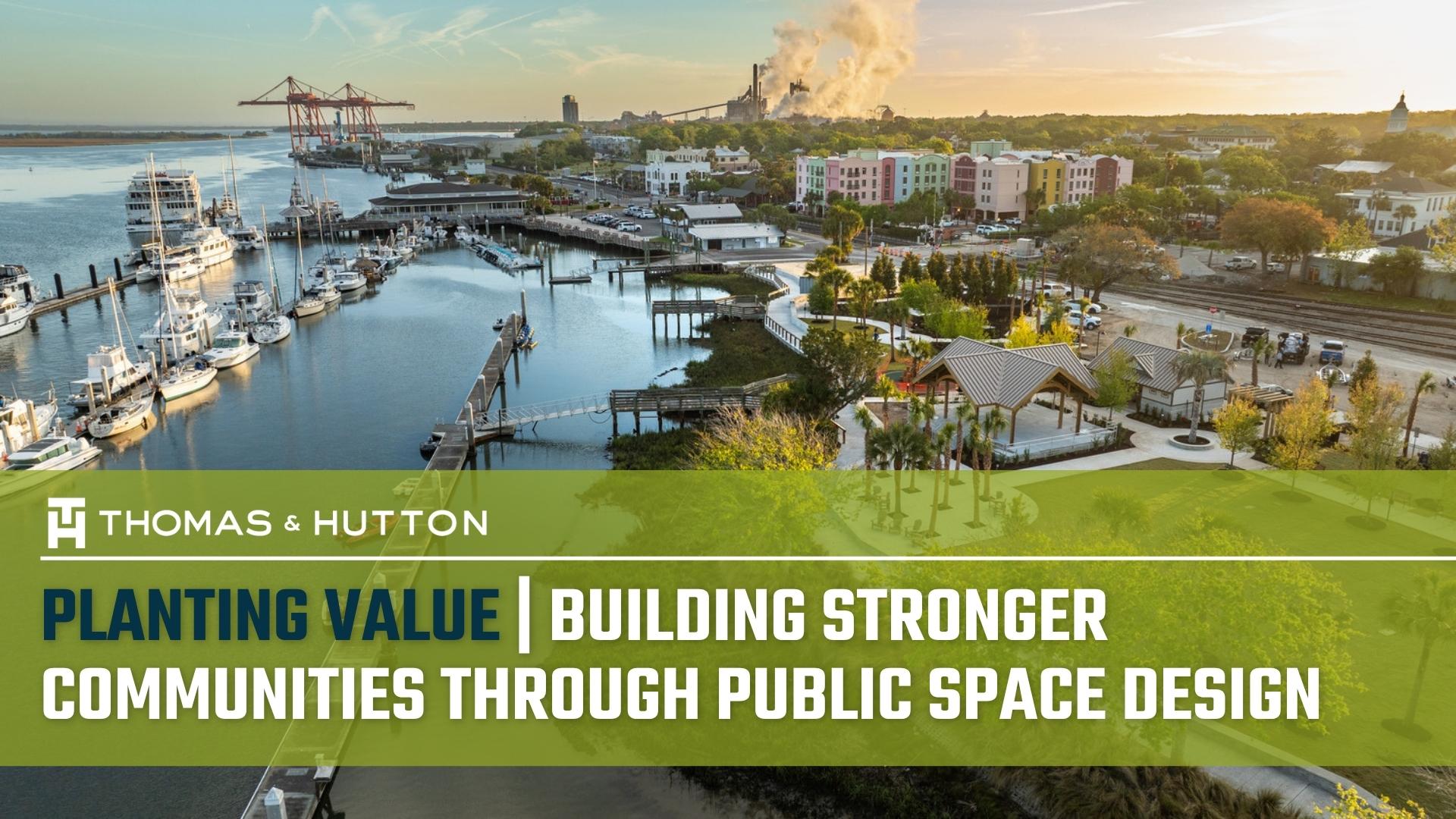
01 May Planting Value: Building Stronger Communities Through Public Space Design
Public spaces are the heart of a community. They bring people together, support local economies, and shape how people experience where they live. But great public spaces don’t just happen. They take thoughtful design, careful planning, and a clear understanding of how people want to gather, move, and connect.
Across the Southeast, communities are rethinking their waterfronts, parks, and public spaces as long-term investments. When done well, these spaces do more than look good. They work hard for the people and cities they serve.
More Than Just a Pretty Space
When cities invest in public spaces, they create places where life happens. A well-designed park or waterfront encourages people to stay longer, return often, and engage with the surrounding community.
That activity has a ripple effect. Local businesses benefit from increased foot traffic. Events and programming bring energy and consistency. Residents feel a stronger connection to their city and to each other.
This is where landscape architecture moves beyond aesthetics. It shapes experiences. A shaded lawn that hosts concerts, a waterfront trail that connects neighborhoods, or a plaza that supports both daily use and large events all contribute to a more active and resilient community.
Activating the Waterfront: Daniel Island Waterfront Park
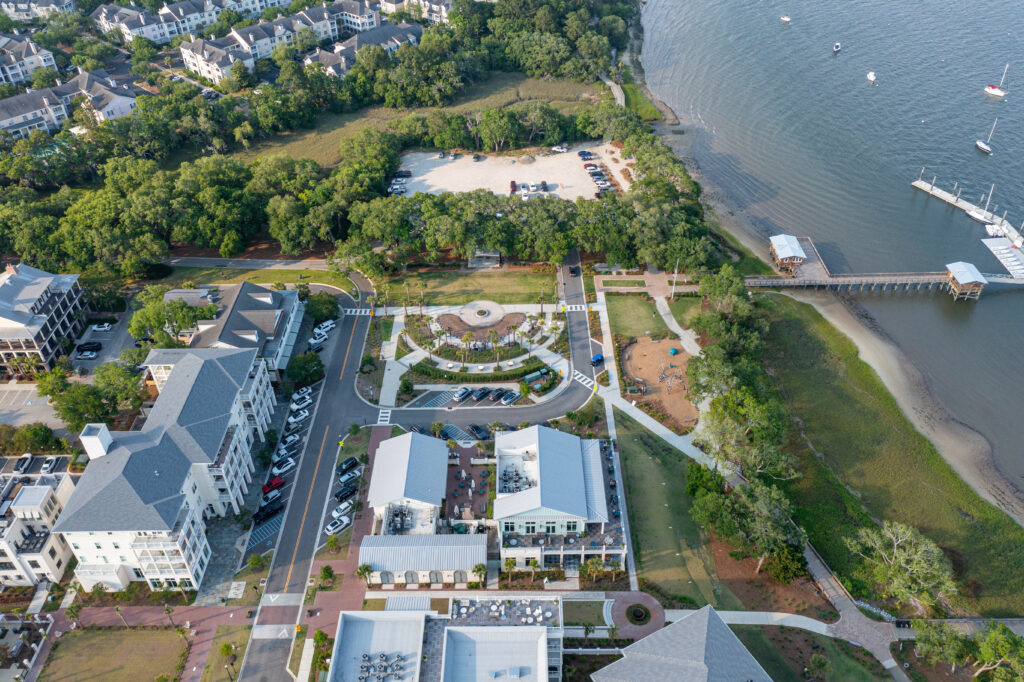
Along 1,000 feet of the Wando River, Daniel Island Waterfront Park has become a defining feature of The Waterfront, a mixed-use district in the Charleston region. Once an underutilized stretch of land, the park now serves as a destination for residents and visitors alike.
The design focuses on flexibility and connection. Multi-use trails with lighting extend usability into the evening hours. A range of seating areas, a playground, and a 2,000-square-foot interactive splash fountain create opportunities for people of all ages to engage with the space.
The splash fountain acts as both a visual anchor and a practical feature, offering relief during Lowcountry summers while remaining fully ADA-accessible. Nearby, a bandshell and open lawn provide space for concerts and community events, including a seasonal concert series.
Beyond the park itself, the project strengthens ties to the surrounding district. The addition of the Daniel Island Yacht Club, public docks, and water-based recreation options such as kayak and paddleboard rentals expand how people use the waterfront. Connections to more than 25 miles of existing trails link the park to the broader island, reinforcing accessibility and daily use.
The result is a space that supports recreation, economic activity, and community identity while remaining accessible for all.
Now Open: Amelia River Waterfront Park
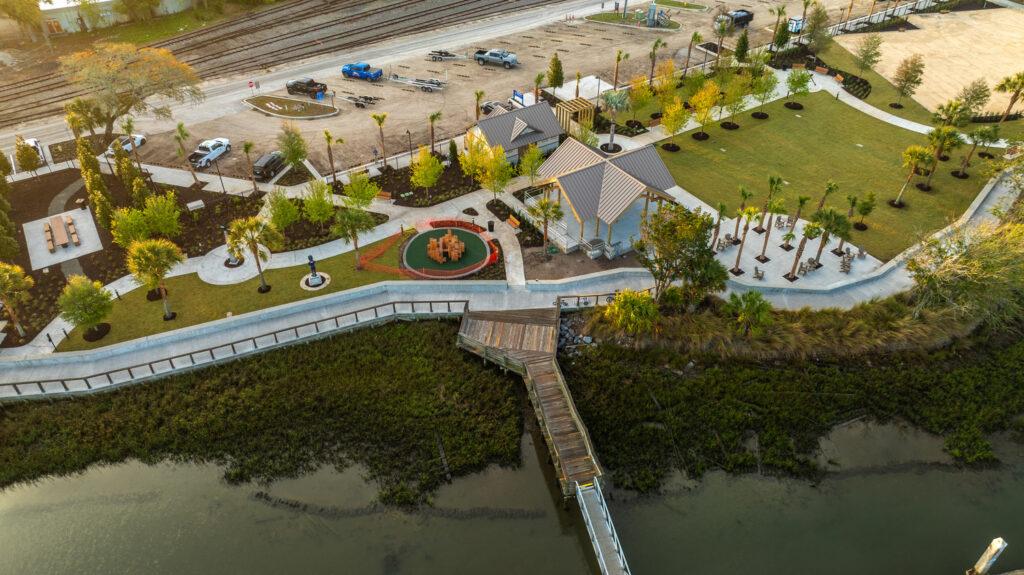
In Fernandina Beach, Florida, a similar transformation has taken shape. The redevelopment of Lots C and D into Amelia River Waterfront Park is reshaping how the community connects with its downtown waterfront.
Located along the Amelia River at the foot of Ash Street, the park expands public access and creates flexible spaces for both everyday use and large-scale events.
The design introduces a continuous riverwalk spanning the public waterfront, improving pedestrian circulation and strengthening connections between the river and adjacent downtown areas. A multi-purpose pavilion with a stage, shaded lawn areas for concerts and festivals, and a seating plaza support a wide range of programming.
Additional features such as a children’s play area, picnic spaces, pollinator gardens, and expanded pétanque courts create opportunities for both active and passive use. Interpretive elements highlight the city’s maritime and shrimping heritage, grounding the park in Fernandina Beach’s identity as a working waterfront community.
The project also addresses infrastructure and resilience. Grading, drainage, stormwater management, and utility improvements are integrated into the design, while floodwall openings and overlook areas maintain both protection and connection to the river.
Since opening on April 11, the park has quickly become a central gathering space, supporting tourism, strengthening downtown vitality, and creating new opportunities for the community to connect with the waterfront.
Beyond the physical transformation, the project carries personal significance for the Thomas & Hutton team. The park includes a memorial bench honoring Charlie George, PE, a longtime Principal and Structural Manager in the firm’s Savannah office. Charlie dedicated 27 years to Thomas & Hutton, serving not only as a technical leader but as a mentor to many across the company.
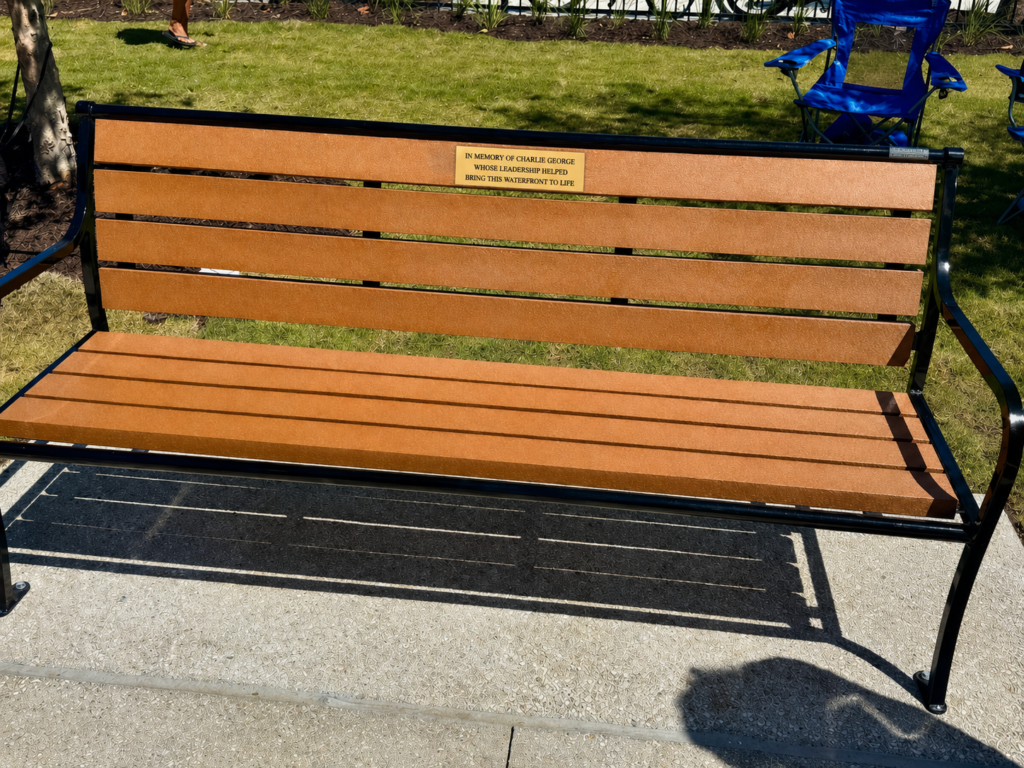
His leadership helped shape the vision and delivery of this waterfront, making the completed park a lasting reflection of his work and commitment. The bench, installed as part of the project, reads: “In memory of Charlie George, whose leadership helped bring this waterfront to life.” It stands as a quiet reminder that the impact of thoughtful design is ultimately about people and the legacy they leave behind.
Why It Matters for Community Leaders and Developers
For both public sector leaders and private developers, the takeaway is straightforward. Investing in well-designed public spaces creates long-term value.
These spaces influence how people experience a place and whether they choose to return. They support economic growth by drawing activity and encouraging investment. They improve quality of life by offering accessible, inclusive environments for recreation and connection.
The impact shows up in measurable ways:
- Economic: Increased foot traffic, stronger retail performance, and rising property values
- Social: Greater sense of belonging, increased public safety, and more opportunities for community interaction
- Environmental: Healthier landscapes, improved stormwater management, and more resilient urban spaces
Public spaces are not an afterthought. They are a foundation for growth.
Communities that prioritize them are not just designing for today. They are shaping how their cities will function and thrive for years to come.
To learn more about how thoughtful landscape architecture can support your next project, visit our Landscape Architecture page or get in touch with our team.
